How Do Outdoor Toys Benefit Child Development?

Time:2026-10-26 Author:Oliver
0%

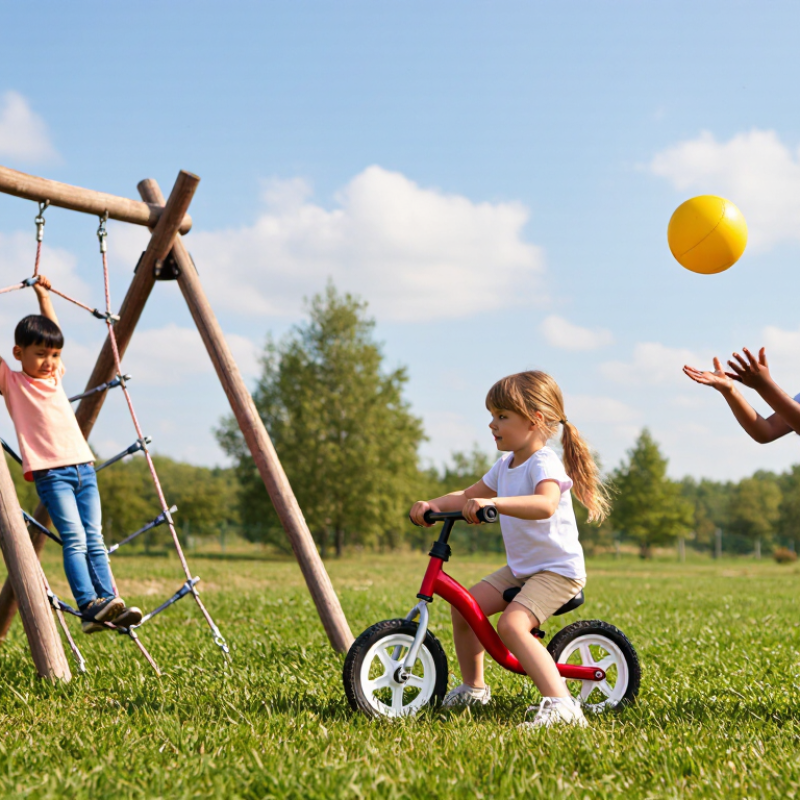
Outdoor play is more than a break from screens. It gives children space to run, balance, build, negotiate, and test ideas with their whole bodies. So, how do outdoor toys benefit child development? A well-designed balance bike can strengthen coordination. A climbing frame can challenge grip, planning, and confidence. Even a simple ball can encourage turn-taking and flexible problem-solving.

The World Health Organization’s Guidelines on Physical Activity, Sedentary Behaviour and Sleep (2019) recommend at least 180 minutes of physical activity daily for children aged three to four. For children aged five to seventeen, the guideline recommends an average of 60 minutes of moderate-to-vigorous activity each day. Outdoor toys can make that movement easier to repeat because they turn exercise into an understandable goal: reach the platform, cross the stepping stones, or catch the ball. Movement matters. The setting matters.

Evidence should still be interpreted carefully. The Aspen Institute’s Project Play reports continue to highlight unequal access to quality play and sports opportunities in the United States. A toy cannot remove unsafe parks, limited space, or family time pressures. Play is not magic. However, research from the American Academy of Pediatrics connects active play with physical, social, emotional, and cognitive growth when adults provide safe, supportive environments. In practice, the best outdoor toy is not always the most expensive one. It is the toy that matches a child’s age, interests, abilities, and available space. Parents and educators should observe real use, check safety guidance, and allow room for imperfect attempts. That is where development often becomes visible.
How Do Outdoor Toys Benefit Child Development?

Types of Outdoor Toys and Their Developmental Roles

How Do Outdoor Toys Benefit Child Development?

Types of Outdoor Toys and Their Developmental Roles

Outdoor toys turn ordinary spaces into active learning environments. Balls encourage running, aiming, catching, and hand-eye coordination. Ride-on toys build balance, leg strength, and spatial awareness. Climbing frames challenge children to plan movements and judge safe distances. These skills support physical confidence during everyday activities. A child may miss the target repeatedly, but each attempt develops persistence and control.

Sand and water play support sensory exploration and early scientific thinking. Children compare weight, volume, texture, and movement while filling cups or building channels. Scooters and stepping stones strengthen coordination and decision-making. Pretend play with outdoor kitchens or gardening tools develops language, cooperation, and imagination. In my experience, open-ended toys often create richer play than toys with one fixed function. Still, some children need guidance before they join shared games.

Tips: Choose toys that match the child’s age, abilities, and interests. Leave enough space for movement, and inspect parts regularly for damage. Offer simple challenges, such as a low balance path or a target at a reachable distance. Stay nearby without controlling every action. Ask, “What could you try next?” rather than correcting each mistake. Outdoor play is not always tidy or successful. That is part of its value. Children learn through wet clothes, uneven throws, and plans that change.

How Outdoor Toys Strengthen Physical Skills and Coordination

Outdoor toys turn movement into a practical lesson in control. A child pushing a ride-on vehicle must steer, brake, and judge distance. Throwing a soft ball links shoulder rotation with visual tracking. Climbing frames require grip strength, balance, and careful weight shifts. These actions develop gross motor skills through repeated, meaningful choices. They also expose weak points. A child may run confidently but struggle to catch.

The World Health Organization recommends at least 60 minutes of moderate-to-vigorous physical activity daily for children aged 5–17, in its 2020 guidelines. Outdoor toys can help fill that time without making exercise feel scheduled. The U.S. Centers for Disease Control and Prevention gives similar daily activity guidance for children aged 6–17. Short bursts count when children chase, pedal, jump, and recover. Coordination improves through variation, not perfect repetition. A balance path one day and a ball game the next challenge different movement systems.

From a developmental perspective, open-ended equipment works best when adults match challenge to ability. Begin with low steps, wide targets, and slow rolling games. Then increase distance or speed gradually. Children often invent harder versions before adults expect them. That creativity is valuable. Supervision still matters. A toy cannot repair every motor delay. If stumbling, pain, or persistent frustration continues, caregivers should consult a pediatric health professional. Evidence supports active play, yet toy-specific outcomes vary. Claims should remain modest.

How Outdoor Play Supports Thinking, Creativity, and Problem-Solving

How Do Outdoor Toys Benefit Child Development?

How Outdoor Play Supports Thinking, Creativity, and Problem-Solving

Outdoor toys do more than fill a sunny afternoon. A ball, balance beam, or water table turns movement into a thinking task. Children test distance, speed, weight, and direction while their bodies stay active. Try again.

In my observations of outdoor play, children rarely follow one fixed plan. They use sticks as bridges, buckets as delivery carts, and chalk lines as roads. This flexible use of objects strengthens creative thinking because there is no single correct design. One child may build a ramp, watch the ball stop, and change the angle. That small failure invites prediction, testing, and problem-solving. It also makes cause and effect visible. Research in child development often connects active, self-directed play with planning and attention. Yet the result is not automatic. Some children need safety boundaries, extra time, or a gentle question before joining.

Adults can support thinking without taking control. Ask, “What could make it roll farther?” Then wait. A pause matters. Children may argue over materials or abandon a project too quickly. Those moments can feel messy, but they offer practice in negotiation and persistence. Outdoor play does not always produce a clever invention. Sometimes the tower falls, and the children simply laugh. That still leaves room for reflection: what changed, what worked, and what might be different tomorrow?

How Shared Outdoor Toys Build Communication and Social Skills

Shared outdoor toys create natural reasons for children to communicate. A large ball, sand table, or water wheel rarely belongs to one child for long. Children ask, “Can I have a turn?” They negotiate rules, explain ideas, and learn to listen. These small exchanges build practical language skills through play, not worksheets.

In outdoor play sessions, I have watched children use gestures before words. One child pointed to a bucket, while another offered a shovel. With gentle adult guidance, they began building a shared sand road. Taking turns also teaches patience and fairness. A child may count to ten while waiting, then pass the toy to a friend. These moments support cooperation and emotional regulation.

Conflict still happens. That matters. Two children may pull the same handle or disagree about game rules. Adults should avoid solving every problem too quickly. Instead, they can ask, “What could work for both of you?” Child-development professionals often recommend this kind of calm scaffolding. It gives children language for compromise while preserving their ownership of play. I have sometimes stepped in too soon, and the children lost a chance to solve the problem themselves. Shared outdoor toys can support social growth, but results depend on supervision, suitable equipment, and enough time for repeated practice.

How Shared Outdoor Toys Build Communication and Social Skills

CDC social-development milestones that shared outdoor play can help children practice

Shared outdoor toys naturally create opportunities for children to join group play, communicate back and forth, pretend, follow rules, and take turns. The ages shown are CDC milestone reference ages, not guaranteed outcomes or measures of causal benefit. Source: U.S. Centers for Disease Control and Prevention.

How to Choose Outdoor Toys for Safe, Age-Appropriate Development

How Do Outdoor Toys Benefit Child Development?

How to Choose Outdoor Toys for Safe, Age-Appropriate Development

Outdoor toys can build balance, coordination, strength, confidence, and social skills. A child pushing a ride-on toy learns steering while adjusting speed. Another child digging in damp soil practices grip control and imaginative thinking. These benefits depend on choosing equipment that matches the child’s abilities, not only their age.

Age labels provide useful guidance, but they cannot describe every child. Children develop unevenly. Watch how your child climbs, reaches, follows instructions, and manages frustration. Choose stable toys with smooth edges, secure handles, and no accessible small parts. Check weight limits and assembly points regularly. Place climbing equipment on a soft, level surface, away from traffic, pools, and sharp objects. Active supervision remains necessary, even when a toy seems simple.

Tips: Begin with one manageable challenge. Leave room for progress. Check toys before each use for cracks, loose screws, hot surfaces, or trapped fingers. Helmets may help with wheeled toys, but correct fit matters. Dress children for movement and weather. Avoid assuming that an older child can safely use equipment designed for younger children. I have noticed that adults sometimes choose exciting toys too quickly. A quieter toy may better support confidence, especially after a recent fall. When uncertain, ask a qualified childcare or child-development professional for advice.

FAQS

How do shared outdoor toys improve children’s communication?

They create natural reasons to speak, listen, ask questions, and explain ideas. A child might ask, “Can I have a turn?” Simple play builds practical language.

What social skills can children practice outdoors?

Children practice sharing, patience, cooperation, fairness, and emotional control. Waiting while someone counts to ten makes turn-taking visible.

How can adults support children during play?

Stay nearby and observe carefully. Ask, “What could work for both of you?” Avoid solving every disagreement immediately.

Should adults stop every outdoor toy conflict?

No. Small conflicts can teach negotiation and compromise. Step in when safety is threatened, but allow children time to try solutions.

How should caregivers choose age-appropriate outdoor toys?

Watch the child’s climbing, reaching, coordination, and frustration tolerance. Select stable equipment that matches current abilities, not age labels alone.

What safety features should outdoor toys have?

Look for smooth edges, secure handles, stable bases, and no reachable small parts. Check weight limits and assembly points regularly.

Where should climbing equipment be placed?

Use a soft, level surface away from traffic, pools, and sharp objects. Check the surrounding area before each play session.

What should adults inspect before outdoor play?

Check for cracks, loose screws, hot surfaces, and trapped-finger gaps. Helmets can help with wheeled toys, but proper fit matters.

What if an exciting toy seems too difficult?

Choose a smaller challenge first. A quiet sand tool may rebuild confidence after a fall. I sometimes choose too quickly, too.

Why does repeated outdoor play matter?

Children need repeated chances to practice sharing, communication, and problem-solving. One session rarely shows the whole picture.

Conclusion

How do outdoor toys benefit child development? They provide children with active, hands-on experiences that support growth in several connected ways. Riding toys, climbing structures, balls, balance equipment, and imaginative play materials help develop strength, endurance, balance, coordination, and body awareness. Outdoor movement also encourages children to test their abilities, understand space, and build confidence through safe physical challenges.

Outdoor play supports more than physical development. Open-ended toys invite children to imagine stories, experiment with ideas, solve simple problems, and make decisions independently. When children play together, they practice communication, cooperation, turn-taking, negotiation, and empathy. Choosing outdoor toys should involve considering a child’s age, abilities, interests, and the available play space. Safe materials, stable construction, suitable sizes, and proper supervision help ensure that outdoor play remains enjoyable while supporting healthy, age-appropriate development.

Oliver

Oliver

Oliver is a seasoned marketing professional with a wealth of expertise in driving brand awareness and engagement. With a deep understanding of our company's product offerings, he consistently delivers high-quality content that enriches our professional blog. His insights not only shed light on......