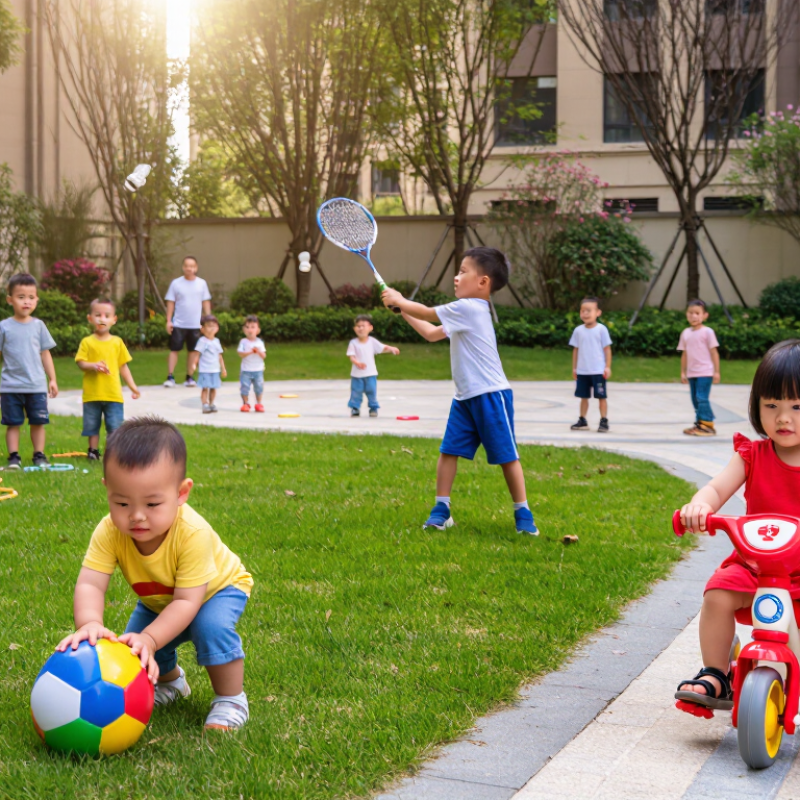
China’s outdoor play scene offers families many ways to turn a courtyard, park, or quiet neighborhood path into a place for movement and discovery. This guide to China’s top 10 outdoor toys for every age group looks beyond bright packaging. It considers how children actually use toys: a toddler pushing a sturdy ball across grass, a preschooler steering a tricycle, or an older child practicing a badminton rally. Small details matter. Grip, balance, storage, and the play surface can shape the experience as much as the toy itself.
Choosing by age is a useful starting point, not a perfect rule. The phrase how to choose outdoor toys for different age groups points to a practical question: what can a child manage safely and enjoy today? Parents should check the maker’s age guidance, inspect parts and fastenings, and match each toy to the child’s coordination and available space. Adult supervision remains important, especially near roads, water, or shared play areas. A helmet or other protective gear may also be appropriate for wheeled toys.
The recommendations in this article span active, creative, and cooperative play, with options for different budgets and outdoor settings. A toy that works beautifully in a large garden may feel awkward on a small balcony. That is easy to overlook. No list can predict every child’s interests, either; some favorites surprise us, and some expensive toys gather dust. Use these picks as a starting point, compare product details carefully, and let the child’s comfort and curiosity guide the final choice.
How China’s Top 10 Outdoor Toys Are Selected
China Top 10 Outdoor Toys for Every Age Group
How China’s Top 10 Outdoor Toys Are Selected
A useful top-ten list should explain its choices, not just show colorful products. We compare toys by age suitability, outdoor use, build quality, and the skills they encourage. A toddler’s push toy needs a stable base and easy-to-grip handles. A ball or balance game for older children should offer room to move and a challenge that feels rewarding, not frustrating.
We also examine practical details. Are edges smooth? Do moving parts feel secure? Can the toy be carried, cleaned, and stored without fuss? Sample checks and clear product information help us judge these points. We consider how materials may handle sun, dust, and repeated play, while recognizing that short tests cannot predict every season of wear. A bright color can catch the eye, but it says little about durability.
Tips: Match the toy to the child’s actual ability, not only the age printed on the package. Check the play area for hard edges, loose parts, and uneven ground. Adult supervision still matters. We may miss a weakness that appears only after months outdoors, so feedback from families can improve future selections.
China’s Top 10 Outdoor Toys: How They’re Selected
Illustrative selection framework showing the criteria and weight used to compare outdoor toys across age groups. Weights are editorial, not market statistics; safety and age suitability receive the greatest emphasis.
Outdoor Toys for Toddlers: Sensory Play and First Movements
For toddlers, outdoor toys work best when they invite touch, movement, and repeated discovery. A shallow water table, a sturdy sand tray, or large textured balls can hold attention without complicated rules. Offer just a few objects at a time: a cup, a scoop, and a soft ball are often enough. Small steps matter. Stay close, especially around water, raised play surfaces, or loose parts that could become choking hazards. Check toys for cracks, sharp edges, and heat before each session.
First movements need room, not pressure. A low push toy or a broad, stable ride-on can encourage walking and balance on a flat surface. Chalk paths and soft outdoor mats give toddlers simple places to step, squat, and reach. Choose equipment suited to the child’s age and abilities, and follow its safety instructions. Keep play areas clear of traffic, hard drops, and standing water. Active supervision matters more than a toy’s feature list.
Sensory play can be pleasantly messy. Let a child pour water between large containers, pat damp sand, or compare a smooth stone with a rough leaf. Check natural materials for sharp edges or dirt, and avoid small objects that fit in a toddler’s mouth. Keep sessions short when the sun feels strong, and offer shade and drinking water. A perfect setup is not necessary; sometimes the empty bucket gets more attention than the new toy. That can be useful to notice.
Outdoor Toys for Preschoolers: Imagination and Coordination
For preschoolers, outdoor toys work best when they invite movement and make-believe without demanding perfect technique. A chalk path can become a river to cross, while a soft ball turns into a parcel for a pretend delivery. Small buckets and scoops give children ways to fill, pour, compare, and coordinate hand movements. This is play with a purpose.
The World Health Organization’s 2019 guidelines recommend at least 180 minutes of varied physical activity daily for children aged three to four, including 60 minutes of moderate-to-vigorous activity. That target is spread across the day, not packed into one exhausting session.
The CDC’s four-year milestones include catching a large ball most of the time and pretending to be another character during play. Treat these as developmental context, not a pass-or-fail test.
Offer simple choices: roll the ball between cones, draw a route, or carry toys in a small basket. Let children change the rules; that is often where imagination appears.
More features do not always help. A toy can look educational yet sit untouched if setup takes longer than a child’s attention. Choose sturdy, age-appropriate equipment, then leave room for the child to invent what happens next.
Outdoor Toys for School-Age Children and Teens: Sport and Challenge
For school-age children and teens, outdoor toys can turn an ordinary afternoon into active practice. Adjustable basketball hoops, jump ropes, and badminton sets suit different skill levels and encourage movement without requiring a large yard. Look for stable bases, smooth edges, and clear age or weight guidance. Small details matter, such as whether a ball is easy to grip with damp hands.
Older children may enjoy more demanding options, including balance obstacles, skating equipment, or team-sport gear. Choose activities that match their experience, not only their age. A beginner may need a low balance beam and a flat practice area; a confident teen might prefer a longer course. Helmets and other protective gear should fit properly, and equipment deserves regular checks for loose parts or worn straps. Space matters.
Play should feel challenging, not punishing. A hoop that cannot be adjusted or a course that is too difficult may quickly lose its appeal. That judgment is imperfect: children’s confidence and ability can change from one week to the next. Ask what they want to practice, then watch how they use the equipment. Adult supervision is especially useful near roads, water, or shared play areas.
Safety, Setup, and Age-Based Toy Selection
Outdoor play should match a child’s abilities, not just their birthday. For toddlers, choose stable, low toys without small detachable parts, and keep play areas clear of stones and hard edges. Preschoolers may enjoy balance toys or small slides, but check that steps and handholds suit their reach. Older children can manage more challenging equipment when they understand how to use it safely. Age labels help, but they cannot replace watching how a child actually plays.
Safety deserves a place in the setup, too. The U.S. Consumer Product Safety Commission estimated 145,500 toy-related injuries treated in hospital emergency departments in 2022. The figure covers many types of toys, but it is a useful reminder to inspect equipment before play. ASTM International’s F963-23 toy safety specification includes requirements and test methods for toys. Look for clear age guidance, secure fasteners, and surfaces that soften falls. Follow the maker’s setup instructions, and recheck bolts after the first few uses.
Space matters. Put a swing set on level ground, leave open clearance around moving parts, and anchor equipment as directed. For younger children, stay close enough to intervene; for older ones, agree on simple rules before play starts. I’d avoid assuming a sturdy-looking toy is automatically safe. Small details, like a loose cap or damp step, can change how it works. Keep the play area suited to the child using it today.
Conclusion
This guide explains how China’s top 10 outdoor toys are selected, focusing on age-appropriate play, opportunities for movement and creativity, durability, and practical safety considerations. For toddlers, suitable choices encourage sensory discovery and simple first movements, such as reaching, stepping, and balancing. Preschoolers benefit from toys that inspire imaginative play while helping them practice coordination and build confidence through active exploration.
For school-age children and teens, outdoor toys can offer more demanding sports, skill-building, and physical challenges suited to their interests and abilities. The guide also highlights how to choose outdoor toys for different age groups by considering a child’s developmental stage, available play space, setup requirements, and the level of adult supervision needed. With thoughtful selection and safe setup, outdoor play can support enjoyable movement, social interaction, and growing independence at every age.

 ProActive Toys