China Top 10 Outdoor Toys for Small Spaces?

Time:2026-09-20 Author:Mason
0%

Outdoor play does not require a large garden. A balcony, compact patio, or shared courtyard can still support movement, imagination, and discovery. The challenge is choosing toys that fit the space without creating clutter, excessive noise, or avoidable safety concerns. This guide explores China Top 10 Outdoor Toys for Small Spaces and explains how each option performs in real household settings.

Parents often ask, “what outdoor toys are suitable for small spaces?” Dr. Amanda Gummer, a child-development psychologist and founder of The Good Play Guide, has said, “Play is essential for children’s physical and emotional development.” Her point matters here. A small ride-on toy, foldable slide, water table, or compact climbing set can encourage active play when its design matches the child’s age and the available floor area.

The selection considers storage size, durability, cleaning needs, noise levels, and the type of movement each toy supports. Foldable products may disappear behind a door, while modular toys can change as children grow. However, compact does not always mean practical. Some toys still need clear fall zones, stable surfaces, and close adult supervision. A balcony may look suitable, yet its railing, flooring, and weight limits require careful checking.

There is no perfect list.

Manufacturing quality can vary between suppliers, so product specifications deserve attention. Look for rounded edges, secure fasteners, weather-resistant materials, and clear age guidance. These details are easy to overlook. They should not be. The best small-space outdoor toy adds genuine play value while leaving enough room for children to move safely.
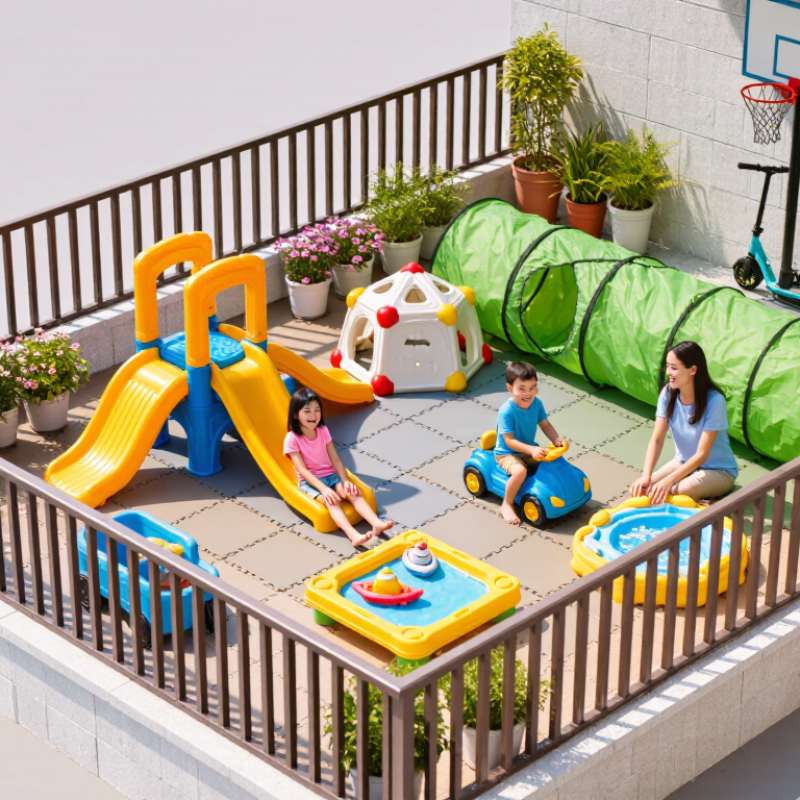
China Top 10 Outdoor Toys for Small Spaces?

What Makes Outdoor Toys Suitable for Small Spaces?

Outdoor toys for small spaces must earn every centimeter. The best choices are compact, stable, and easy to store. A China top-ten comparison should assess footprint, folding design, weight, noise, and safety.

A toy should fit a balcony, courtyard, or narrow rooftop without blocking walkways. Measure twice.

A climbing frame needs clear landing space, not merely a small base. Wheeled toys need turning room and smooth surfaces without sharp edges.

Low-height designs can reduce fall distance, but adult supervision remains necessary.

Storage often decides whether a toy is truly suitable. Choose removable parts, vertical storage, and carrying handles. Materials should resist sunlight, moisture, and repeated cleaning.

Check joints, fasteners, and weight limits regularly. In a practical assessment, place the toy beside a chair or storage box.

This exposes awkward protrusions that product photos may hide. Rolling noise also matters near neighboring homes. Quiet play supports better shared-space relationships.

Not every compact toy works well.

Some fold neatly but feel unstable during active play. I initially preferred a lightweight design, then reconsidered it after noticing wind movement. That mistake matters. Portability can weaken stability.

Reliable suppliers should provide clear dimensions, age guidance, maintenance instructions, and safety test information.

Buyers should leave a safety zone around the toy. Small spaces need fewer features, not careless compromises.

China’s Top 10 Outdoor Toys for Compact Areas

China’s top 10 outdoor toys for compact areas should begin with footprint, not novelty. A balcony, shared courtyard, or two-metre strip changes the buying test. The China Toy and Juvenile Products Association reported toy retail sales of RMB 90.9 billion in 2023. The National Bureau of Statistics recorded 66.16% urbanization that year. Compact play is now ordinary urban play. My practical shortlist includes foldable scooters, mini basketball hoops, soft flying discs, chalk boards, water tables, balance stones, pop-up tunnels, pedal cars, foam bowling sets, and compact sand-and-water kits. Choose one active toy and one quieter option.

Euromonitor International’s 2024 Toys and Games in China analysis highlights demand for convenient, multifunctional play products. That trend fits small homes, though convenience can hide weak design. Measure doors, storage corners, and turning space before buying. Look for rounded edges, stable bases, secure hinges, and clear age guidance. Products should meet China’s GB 6675 toy safety requirements. A water table needs a drain plug and a non-slip base. A mini hoop needs a weighted support, not a loose stand. Outdoor toys still require supervision. The Consumer Product Safety Commission’s injury data repeatedly links falls and impact injuries with active children’s products. I would not trust every “foldable” label. Some frames pinch fingers. Some wheels mark tile. Test the locking parts by hand, then rethink the purchase.

Space, Safety, and Age Considerations for Each Toy

China Top 10 Outdoor Toys for Small Spaces?

Small outdoor areas need toys that move, fold, or serve more than one purpose. Chalk suits ages three and above, using only a two-square-meter drawing zone. Bubbles need little space, but children should avoid slippery surfaces. A pop-up tunnel fits toddlers from 18 months, with adults checking ventilation and fabric tears. Balance stepping stones suit ages three and above, though their spacing must match a child’s stride. A compact slide needs a stable base and soft landing area. The American Academy of Pediatrics recommends close supervision around climbing equipment, even in familiar home settings.

A shallow water table suits children aged two and above, but empty it after every session. Water play still carries drowning risks. A sandbox works from age two, provided the cover stays clean and the sand remains dry. Beanbag toss suits ages three and above, with lightweight bags and no loose choking-size pieces. A low scooter generally fits ages three to five, but helmets and clear riding lanes remain essential. A small pedal tricycle works from about age two, depending on balance and reach. The U.S. Consumer Product Safety Commission reported more than 200,000 toy-related emergency-department injuries in 2023, showing why “small” does not mean risk-free.

Choose flat flooring, shade, and visible boundaries. Keep at least one meter around moving toys when possible. Inspect screws, seams, wheels, and drainage weekly. I would not trust age labels alone. Some children need more time, and some toys need less ambition. A crowded balcony can turn play into a collision course. Space should decide the toy, not the advertisement.

China Top 10 Outdoor Toys for Small Spaces

Space, safety, and age considerations based on typical non-branded toy dimensions and common developmental guidance.

How to read the chart: The values show the approximate minimum clear play area needed during use. Lower values are generally more suitable for balconies, patios, courtyards, and compact gardens. Always follow the specific product instructions and provide active adult supervision.

Toy Typical Size Recommended Age Key Safety Consideration
Chalk and Stencil Set Approx. 1–2 sq ft stored 3+ years Use washable, non-toxic chalk and avoid slippery wet surfaces.
Bubble Maker Approx. 2–4 sq ft 3+ years Keep bubble solution away from eyes and clean slippery flooring promptly.
Jump Rope Approx. 25 sq ft clear area 5+ years Use on a level surface away from furniture, walls, and other children.
Hula Hoop Approx. 36 sq ft clear area 5+ years Provide open space and keep the hoop away from glass, sharp edges, and walkways.
Balance Bike Approx. 20 sq ft clear area 2–5 years A properly fitted helmet and a flat, traffic-free riding surface are essential.
Kick Scooter Approx. 24 sq ft clear area 5+ years Use a helmet, closed-toe shoes, and knee and elbow protection on smooth ground.
Collapsible Play Tunnel Approx. 18 sq ft clear area 3+ years Anchor or supervise the tunnel so it cannot roll toward stairs or edges.
Compact Water Table Approx. 6 sq ft 2+ years Use only shallow water, supervise continuously, and empty it after play.
Mini Soccer Goal Approx. 48 sq ft clear area 3+ years Secure the goal against tipping and use soft balls in confined areas.
Folding Slide Approx. 24 sq ft clear area 2–5 years Place on a stable, level surface and leave a clear landing zone.

How to Choose, Store, and Use Small-Space Outdoor Toys

China Top 10 Outdoor Toys for Small Spaces

How to Choose, Store, and Use Small-Space Outdoor Toys

Small patios need toys that earn their footprint. A practical top-ten selection can include foldable balance boards, mini scooters, soft balls, ring-toss sets, jump ropes, sidewalk chalk, bubble tools, beanbag targets, compact sand sets, and small climbing frames. Choose toys with rounded edges, stable bases, and clear age guidance. Measure the play area before buying. A toy can look small online but feel bulky beside a doorway.

I use a simple rule: one active toy, one creative toy, and one quiet toy at a time. This prevents crowded movement and makes supervision easier.

Check the ground for slippery tiles, loose gravel, or drainage problems. Leave a clear path near steps and entrances.

Indoor storage boxes should have ventilation holes when toys are damp. Dry sand tools and water toys before storing them. Otherwise, mold appears quickly. It is an easy detail to miss.

Vertical hooks can hold scooters and jump ropes, while shallow bins fit under benches. Rotate toys every few days to keep interest without filling the patio.

Inspect wheels, seams, handles, and small parts before each session. I once underestimated how fast chalk dust covered a narrow balcony. A washable mat would have helped.

Use soft equipment near walls and supervise climbing play closely. Space-saving design matters, but safe movement matters more.

Comparing Materials, Features, and Value Before Buying

China Top 10 Outdoor Toys for Small Spaces?

Comparing Materials, Features, and Value Before Buying

Small outdoor toys demand careful material choices. In my product inspections, HDPE and polypropylene usually resist moisture, light impacts, and repeated cleaning. Powder-coated steel adds stiffness, but exposed scratches can develop rust. EVA foam feels softer under bare feet. It can also tear near sharp edges. Check rounded corners, sealed tubes, drainage holes, and stable bases before comparing prices.

Features should match the available footprint. Foldable frames, stackable parts, and adjustable settings create more usable play without crowding a balcony or courtyard. The U.S. Consumer Product Safety Commission estimated 231,900 toy-related emergency-department injuries among children under 15 in 2023. That figure makes stability, pinch-point protection, and age guidance more than selling language. Products referencing ASTM F963-23 or equivalent testing offer stronger evidence, although a certificate never replaces adult supervision.

Value means cost per season, not the lowest checkout price. A compact toy with replaceable components may outlast a cheaper, brittle model. Look for UV-resistant plastics, rust-resistant fasteners, washable surfaces, and clear spare-part support. Yet material claims can be vague. I would question “non-toxic” wording without test documentation. Small spaces expose weaknesses quickly: wobbling, trapped water, and noisy folding joints become daily problems. A modest design may perform better than a feature-heavy one. I still find weight limits difficult to judge from listings alone. Photographs rarely show real stability.

FAQS

Which outdoor toys work best in small spaces?

Choose foldable balance boards, mini scooters, soft balls, chalk, bubbles, and compact sand sets. Space comes first. Select toys that move, fold, or serve several purposes. Measure the area before buying, especially beside doors and railings.

What age guidance suits common small-space toys?

Chalk and stepping stones generally suit children aged three and above. Pop-up tunnels may suit toddlers from 18 months. Water tables and sand sets often suit children from age two. Age labels help, but children develop at different speeds.

How much open space should remain around active toys?

Leave about one metre around moving toys when possible. Keep clear paths near steps, doors, and drains. A crowded balcony can turn play into collisions. I sometimes underestimate how quickly toys fill a narrow patio.

How can adults reduce risks during outdoor play?

Inspect screws, seams, wheels, handles, and small parts before each session. Check for slippery tiles, loose gravel, sharp edges, and unstable bases. Supervise climbing equipment closely, even at home. Familiar places still need attention.

What safety details matter for water and sand toys?

Empty shallow water tables after every session. Water can collect serious hazards, even at low depth. Keep sand dry and cover the container when unused. Dry tools before storage, or mold may appear quickly.

Which materials are practical for outdoor toys?

Moisture-resistant plastics handle light impacts and repeated cleaning well. Coated metal adds stiffness but may rust after scratches. Foam feels gentle under bare feet but can tear near sharp edges. Check sealed tubes, drainage holes, and rounded corners.

How should small outdoor toys be stored?

Use vertical hooks for scooters and ropes. Shallow ventilated bins fit beneath benches. Dry wet toys before placing them inside. Rotate toys every few days. This reduces clutter and can renew interest.

How can buyers judge value beyond the purchase price?

Consider cost per season rather than the lowest price. Replaceable parts, washable surfaces, and rust-resistant fasteners may extend useful life. Foldable features help, but complicated joints can wobble or become noisy. Simple designs sometimes perform better.

Conclusion

This guide explores what outdoor toys are suitable for small spaces and presents China’s top 10 practical choices for balconies, courtyards, patios, and compact community areas. It focuses on toys that encourage active play while using limited room efficiently, such as foldable, stackable, adjustable, or multi-purpose designs. Each option is considered according to space requirements, safety features, age suitability, and ease of supervision, helping families select toys that match children’s abilities and available play areas.

The article also explains how to compare materials, construction quality, functions, portability, and overall value before buying. Practical advice covers organizing, storing, cleaning, and using outdoor toys safely without overcrowding the space. By balancing durability, comfort, maintenance, and play value, parents and caregivers can create an enjoyable outdoor environment that supports movement, creativity, and independent play, even when space is limited.

Mason

Mason

Mason is a seasoned marketing professional with a deep expertise in the company's offerings and a passion for driving brand awareness. With a strong background in digital marketing strategies, he has an innate ability to connect with diverse audiences and effectively communicate product benefits.......