Outdoor play turns everyday movement into meaningful sensory learning. This article explores China’s top 10 outdoor toys and their potential developmental value. The selection considers tactile variety, movement opportunities, visual appeal, balance demands, durability, and age-appropriate design. Examples may include balance bikes, sand and water tables, climbing frames, sensory stepping stones, outdoor musical toys, scooters, ride-on cars, bubbles, ball games, and gardening sets.
The central question is: how do outdoor toys enhance sensory development? They invite children to touch rough, smooth, wet, and flexible surfaces. They also strengthen proprioceptive awareness through pushing, pulling, jumping, climbing, and carrying. Spinning, balancing, and changing direction can support vestibular processing. Bright colors, moving objects, outdoor sounds, and natural textures add visual and auditory input. Small hands learn through action.
Practical child-development guidance supports varied, active play rather than passive entertainment. Occupational therapy principles also emphasize gradual challenges, repetition, and responsive adult support. A child may hesitate before stepping onto a balance path, then smile after finding stability. That moment matters.
However, no toy works perfectly for every child. Some children dislike loud sounds or unexpected textures. A ranking can never replace individual observation. Product quality also varies between brands and batches, especially in fast-growing toy markets. Therefore, this guide considers safety features, material information, supervision needs, and realistic play value. Parents and educators should check age labels, inspect parts regularly, and adapt activities to each child’s comfort and abilities. Sensory growth needs time. Good play leaves room for curiosity, mistakes, and reflection.
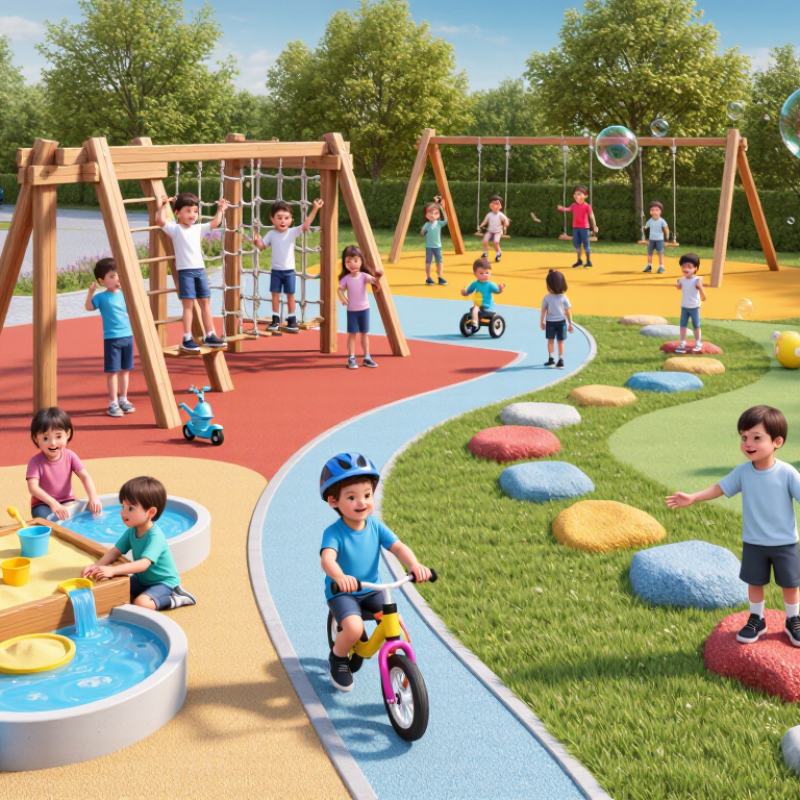
Outdoor toys are important because children learn through their whole bodies. A climbing frame challenges balance, grip strength, and spatial awareness. A swing provides repeated movement that can support vestibular processing. Sand, water, leaves, and smooth stones offer different textures for tactile exploration. These experiences help children notice pressure, temperature, movement, and surface changes.
In practice, a child pushing a ride-on toy must judge distance and direction. Throwing a soft ball develops hand-eye coordination and timing. A balance beam encourages careful foot placement and body control. Outdoor play also combines sounds, sunlight, motion, and changing surroundings. This richer sensory setting can support attention and flexible responses. Child-development professionals commonly recommend varied, active play instead of relying on one type of equipment.
Not every child responds positively at once. Some children avoid wet sand or loud group games. Others need slower movement and clear boundaries. Adults should observe, rather than force participation. I have noticed that simple toys often invite deeper exploration than complicated ones. A bucket may become a drum, a digging tool, or a container for leaves. That creativity matters. Outdoor toys should be age-appropriate, inspected regularly, and used on safe surfaces. Sensory development is not perfectly predictable, and one play activity cannot meet every child’s needs.
| No. | Outdoor Toy Category | Main Sensory Inputs | How It Supports Sensory Development | Additional Developmental Skills | Typical Age Range | Key Safety and Design Considerations |
|---|---|---|---|---|---|---|
| 1 | Balance Bikes | Vestibular Proprioceptive Visual | Riding, steering, and stopping require the child to process movement, body position, speed, and visual information at the same time. | Dynamic balance, bilateral coordination, spatial awareness, confidence, and motor planning. | 2–5 years | Use a properly fitted helmet, low step-through frame, child-sized seat, non-slip grips, and a flat area away from traffic. |
| 2 | Scooters | Vestibular Proprioceptive Visual | Repeated pushing and gliding provide movement feedback while steering helps children judge direction, distance, and obstacles. | Core strength, rhythm, coordination, reaction time, and traffic-awareness habits. | 3–8 years | Choose a stable three-wheel model for younger children, inspect the steering system regularly, and require protective equipment. |
| 3 | Swings | Vestibular Proprioceptive Tactile | Forward-and-back movement stimulates the balance system, while holding the chains or ropes provides pressure and grip feedback. | Postural control, timing, leg coordination, body awareness, and self-regulation. | 3–8 years | Use age-appropriate seats, secure suspension points, impact-absorbing ground, and adequate spacing between swing bays. |
| 4 | Slides | Vestibular Proprioceptive Tactile | Climbing, waiting, sliding, and landing expose children to changes in height, speed, pressure, and body orientation. | Gross-motor strength, sequencing, risk assessment, spatial planning, and confidence. | 2–8 years | Provide secure steps and handrails, rounded edges, a suitable slide height, and a shock-absorbing landing surface. |
| 5 | Sand and Water Play Sets | Tactile Visual Proprioceptive | Pouring, scooping, squeezing, and shaping materials give varied feedback about texture, resistance, temperature, and volume. | Fine-motor control, hand strength, early mathematics, creative thinking, and language development. | 2–7 years | Use non-toxic, smooth-edged tools; keep play materials clean; avoid small detachable parts for children under three. |
| 6 | Climbing Frames | Proprioceptive Vestibular Visual | Pulling, pushing, hanging, and climbing help children interpret muscle force, joint position, height, and changing balance demands. | Upper-body strength, motor planning, grip control, problem solving, and safe risk management. | 4–10 years | Platforms should have secure barriers, handholds should fit small hands, and fall zones should use impact-absorbing surfacing. |
| 7 | Outdoor Ball Games | Visual Proprioceptive Auditory | Tracking, catching, kicking, and throwing require children to combine visual movement cues with force and timing feedback. | Hand-eye coordination, bilateral integration, reaction speed, cooperation, and turn-taking. | 3–10 years | Select soft, lightweight balls for beginners and provide an open play area free from roads, sharp objects, and fragile surfaces. |
| 8 | Tricycles and Pedal Vehicles | Vestibular Proprioceptive Visual | Pedaling and steering give continuous feedback about leg force, body position, direction, speed, and stopping distance. | Lower-body strength, bilateral coordination, spatial awareness, endurance, and independence. | 2–6 years | Use a stable wheelbase, controlled steering range, enclosed pedals where appropriate, and a supervised, traffic-free surface. |
| 9 | Outdoor Musical Play Equipment | Auditory Tactile Visual | Striking, shaking, or tapping produces sound-and-action feedback that supports auditory discrimination and sensory exploration. | Rhythm, listening, cause-and-effect understanding, creativity, communication, and social play. | 2–8 years | Choose durable instruments with moderate sound levels, smooth surfaces, secure fasteners, and no accessible pinch points. |
| 10 | Outdoor Obstacle Courses | Vestibular Proprioceptive Tactile Visual | Moving over, under, around, and through varied surfaces and heights challenges children to adapt their movement and body position. | Executive function, sequencing, agility, coordination, persistence, and flexible problem solving. | 4–10 years | Offer progressive difficulty, clear routes, stable equipment, visible boundaries, and enough space between activities to prevent collisions. |
Sensory development is supported through varied movement, touch, visual tracking, sound, and resistance. Children develop at different rates, so outdoor play should be supervised, voluntary, and adapted to the child’s age, ability, and comfort level.
Sand tables, water walls, balance beams, stepping stones, swings, and bubble stations offer varied sensory experiences. Children feel texture, temperature, movement, and resistance. Some children may prefer only one activity.
Scooping sand strengthens hand control and tactile awareness. Pouring water teaches weight, temperature, and cause-and-effect. Wet hands can feel unpleasant for some children.
Offer sand tools, water cups, textured balls, and low push toys. Keep sessions short because toddlers may leave suddenly. That is normal.
Gentle swinging, chalk drawing, bubbles, balance boards, and simple climbing frames work well. Bubbles encourage watching, reaching, and controlled breathing. Stay close to climbing equipment.
Create simple obstacle courses with ropes, buckets, stepping areas, and beanbags. Children can crawl, carry, jump, and aim at marked spots. Keep the layout clear.
Do not force wet textures, loud sounds, sudden swinging, or messy play. Reduce height, noise, or difficulty when a child appears tense. Trust matters more than finishing an activity.
Use age-appropriate equipment on level ground. Check edges, fasteners, surfaces, and climbing areas regularly. Loose parts can become dangerous.
Add leaves, smooth stones, pinecones, or soil during supervised activities. Inspect each item for sharp edges, insects, or dirt before use. Natural play needs care.
Adults can offer two choices, such as water play or stepping stones. Pause and observe instead of giving constant instructions. The plan may fail. That feedback still helps.
Outdoor toys play an important role in children’s sensory development by turning everyday movement and exploration into meaningful learning. This article explores how do outdoor toys enhance sensory development through China’s top 10 outdoor toy categories, including sand and water play tools, balance equipment, climbing structures, ride-on toys, musical play items, building sets, sensory paths, and nature-based discovery tools. These activities encourage children to observe colors and shapes, listen to different sounds, feel varied textures, and coordinate body movement while playing.
The article also explains age-based ways to choose and use outdoor toys for sensory growth, from simple tactile and movement activities for younger children to more challenging balance, coordination, and problem-solving games for older ones. To support safe and enjoyable play, parents and educators should select age-appropriate equipment, check materials and stability, provide proper supervision, and create an open play environment where children can explore at their own pace.

 ProActive Toys