5 Best Outdoor Play Equipment Features for Schools?

Time:2026-09-30 Author:Charlotte
0%

Choosing outdoor play equipment is not simply a matter of bright colors or impressive climbing towers. School leaders must ask, “what should schools look for in outdoor play equipment” before approving a purchase. The answer involves safety, developmental value, accessibility, durability, supervision, and long-term maintenance. Each feature should work in a real schoolyard, where wet surfaces, crowded recess periods, and curious children create constant challenges.

The U.S. Consumer Product Safety Commission reports that more than 200,000 children receive emergency-room treatment for playground-related injuries each year. Its Public Playground Safety Handbook emphasizes protective surfacing, fall zones, equipment spacing, and regular inspections. The National Program for Playground Safety also connects quality playground design with age-appropriate challenge and active supervision. These findings make safety a daily practice, not a certificate placed in a file.

Play matters deeply. Dr. Joe Frost, a respected playground researcher, wrote, “Play is the business of childhood.” His words support equipment that encourages movement, imagination, cooperation, and manageable risk. A low balance beam may build confidence. A shaded sensory panel may invite quieter children into group play. Small details count.

Still, no product is perfect. Schools can overlook heat, drainage, vandalism, or replacement costs. They may also confuse accessibility with one special feature. That needs reflection. The strongest choices balance adventure with inclusion and practical care. This guide examines five outdoor play equipment features that can help schools create safer, richer, and more resilient play spaces.
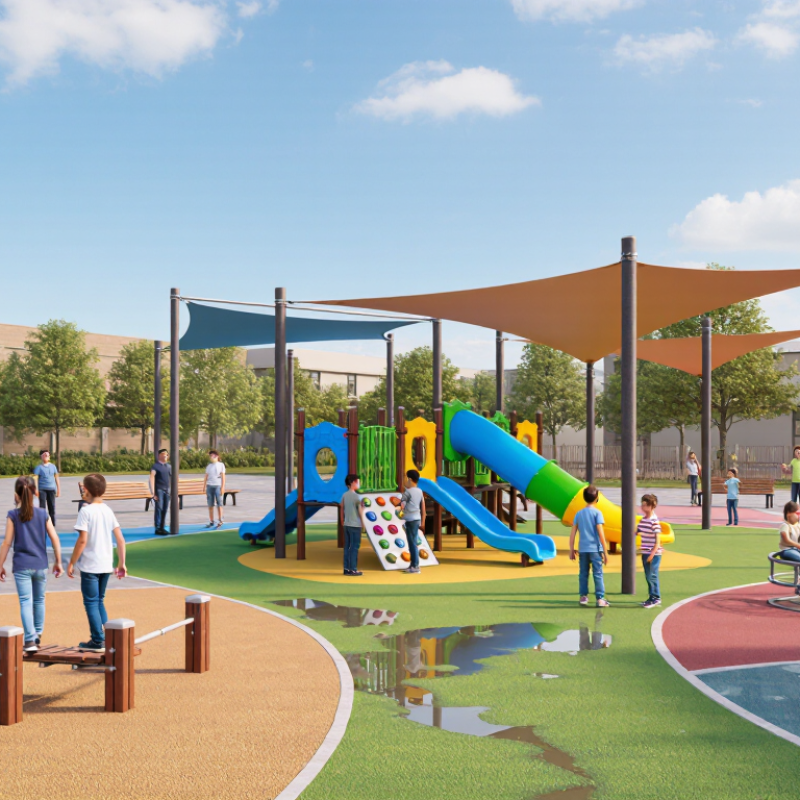
5 Best Outdoor Play Equipment Features for Schools?

Safety and Accessibility Standards for School Outdoor Play Equipment

5 Best Outdoor Play Equipment Features for Schools?
Safety and Accessibility Standards for School Outdoor Play Equipment

A school playground should invite movement without making access feel like an afterthought. Start with a continuous, firm route from the school entrance to play areas, with enough room for mobility devices to turn and pass. Accessible equipment matters, too. Ground-level activities, transfer points, and varied play options let more children join without requiring every child to use the same equipment.

Fall protection deserves careful attention. Use impact-absorbing surfacing suited to the equipment’s height, and keep clear fall zones around climbing and swinging areas. Loose-fill materials can shift, especially near busy exits. That creates a maintenance issue, not just a design detail. Check surfaces, fasteners, and moving parts on a documented schedule, and after severe weather or reported damage.

Requirements vary by location and equipment type, so schools should confirm applicable safety and accessibility standards with qualified professionals. Ask for installation records and inspection guidance before opening a play area. Then observe how students actually use it: a route may look accessible on a plan but become blocked by benches or crowded play. We can miss things. Staff and student feedback can reveal those gaps, though feedback alone cannot replace inspections. Keep records of repairs and follow-up checks.

Durable Materials and Weather-Resistant Construction

Outdoor play equipment faces more than energetic use. Sunlight fades plastics, rain enters joints, and winter freeze-thaw cycles can loosen fittings. Durable materials help schools reduce repairs and keep play areas dependable. Look for UV-stabilized plastics that resist brittleness, and corrosion-resistant steel with a coating suited to the local climate. No material is maintenance-free.

Details matter. Water should drain away from platforms and hollow sections, rather than pooling near seams. Check exposed bolts, welds, and connection points for finishes that can chip or trap moisture. In coastal or damp locations, corrosion resistance deserves extra attention. Wood can offer a natural feel, but it needs suitable treatment and regular checks for splinters, cracks, or decay. Rain finds gaps. A quick visual inspection after storms can reveal loose hardware or standing water before small problems grow. Still, weather-resistant construction cannot compensate for poor installation or skipped maintenance. School staff should follow the equipment maker’s care instructions and record recurring wear; that record may show that a seemingly minor issue keeps returning.

Age-Appropriate Designs for Different Student Developmental Stages

Age-Appropriate Designs for Different Student Developmental Stages

School play spaces work best when challenges match children’s abilities, not just their ages. The U.S. Consumer Product Safety Commission’s Public Playground Safety Handbook separates equipment for ages 2–5 from equipment for ages 5–12. For younger pupils, choose low platforms, short slides, broad steps, and handholds that small fingers can grasp. Older children benefit from climbing routes, balance challenges, and spaces for cooperative games. Keep sightlines open, so staff can supervise without blocking play.

Tips: Check reach, grip, and landing space at child height. WHO recommends at least 60 minutes of moderate-to-vigorous activity daily for children aged 5–17. A loop for running, a climbing frame, and a low balance beam can offer varied movement without making every activity competitive. Small details matter.

Age bands are useful, but they are not perfect: children develop at different rates, and some need accessible routes or quieter play options. Ask students what feels exciting or intimidating, then observe how they use the equipment during busy recess. A platform that looks manageable on paper may feel very high to a younger child. Review the layout as students grow, and adjust supervision and activity choices accordingly.

5 Best Outdoor Play Equipment Features for Schools

Age-appropriate design priorities across student developmental stages

The 1–5 scores are a qualitative planning guide, not measured research results. Prioritize age-graded challenge, balance and climbing, cooperative play, imaginative play, and inclusive access; adapt choices to students’ abilities, supervision needs, and local safety requirements.

Equipment That Encourages Physical Activity and Social Interaction

For schools, outdoor equipment should invite movement and make it easy for children to play together. A useful mix includes climbing nets, balance elements, swings, and open space for running games. Routes with several ways up or down let children choose a challenge and avoid crowding. Small details matter: a low platform beside a taller one can help children with different abilities share an area. The CDC’s 2023 Youth Risk Behavior Survey found that only 23.9% of U.S. high school students got at least 60 minutes of physical activity daily. That figure is a reminder, not proof that playground equipment alone increases activity.

Social play needs shared tasks, not just nearby stations. A group seesaw, wide bridge, or paired balancing feature can encourage turn-taking and cooperation. Add open zones for tag or ball games, plus visible seating near play routes so staff can supervise and children can pause. The World Health Organization recommends an average of 60 minutes of moderate-to-vigorous activity per day for children and adolescents; school play can contribute, but it cannot meet every need. Include firm paths, varied challenge levels, and accessible transfer points. Test the layout during recess. Notice who waits, who is left out, and where conflicts cluster. Some equipment looks social on a plan but stays unused. Adjust it.

Easy Maintenance, Supervision, and Long-Term Value

5 Best Outdoor Play Equipment Features for Schools?
Easy Maintenance, Supervision, and Long-Term Value

Outdoor equipment earns long-term value when staff can inspect and maintain it without special tools. Choose durable, replaceable components and clear access to bolts, joints, and drainage points. After rain, a caretaker should be able to spot standing water, loose fittings, or worn surfacing during a short walk-through. Simple matters.

The U.S. Consumer Product Safety Commission’s Public Playground Safety Handbook cites an estimate of more than 200,000 children treated in emergency rooms each year for playground equipment-related injuries. This is an older estimate, not a current annual count, but it reinforces the need for routine checks. Keep inspection logs specific: record the location, defect, date, and repair. A checklist alone is not enough if staff lack time to act on it.

Supervision-friendly layouts also support daily use. Clear sightlines between play zones help staff observe children without crossing crowded paths. Place seating where adults can see climbers, swings, and quieter areas at once. Shade matters, too; it can make a sunny corner usable during warmer parts of the school day. Still, even a well-planned site needs seasonal review. Tree growth, shifting surfacing, and heavy use can change visibility and wear. Long-term value depends on budgeting for replacement parts and surfacing, not just the initial installation.

5 Best Outdoor Play Equipment Features for Schools? - Easy Maintenance, Supervision, and Long-Term Value

Feature What to Look For Maintenance Impact Supervision Benefit Expected Long-Term Value
1. Durable, Low-Maintenance Materials Use corrosion-resistant metals, UV-stable plastics, sealed wood, and rounded, splinter-free surfaces. Components should be replaceable without removing the entire structure. Lower risk of rust, cracking, splinters, and frequent repainting. Fewer damaged parts reduce hazards that require immediate closure. Longer service life and lower repair and replacement costs.
2. Open Sightlines and Visibility Choose layouts with clear views across platforms, slides, climbing areas, and entry points. Avoid unnecessary solid panels and hidden corners. Open designs make litter, standing water, and damage easier to identify. Staff can monitor more children from fewer positions. Improves operational efficiency and supports safer daily use.
3. Safety Surfacing and Drainage Install impact-attenuating surfacing appropriate for fall heights, with proper edging, drainage, and sufficient clearance around equipment. Good drainage limits puddles, erosion, mold, and surface displacement. Consistent, level surfaces reduce trip hazards and make activity easier to observe. Helps protect the play area and reduces costly corrective work.
4. Inclusive, Multi-Use Design Include varied physical challenges, accessible routes, transfer options, sensory elements, and play opportunities for different ages and abilities. Modular and multi-use elements can be adapted or repaired individually. More children can participate within the same supervised area. Extends usefulness across grades, activities, and ability levels.
5. Inspection-Friendly Construction Select equipment with accessible fasteners, secure handrails, capped hardware, clear labels, and documented inspection and maintenance guidance. Routine checks are faster, more consistent, and easier to document. Visible safety features help staff identify loose parts, wear, or misuse promptly. Supports preventive maintenance and reduces unexpected downtime.
Practical evaluation note: Schools should confirm that equipment, fall zones, surfacing, accessibility, installation, and maintenance procedures comply with applicable local regulations and recognized playground safety standards. A documented inspection schedule should include routine visual checks, operational checks, and periodic detailed inspections.

FAQS

What makes a school playground accessible?

Provide a firm, continuous route from the entrance to each play area. Leave enough space for mobility devices to turn and pass. Include ground-level activities, transfer points, and varied play choices. One route may look clear but become blocked during recess.

How should schools reduce fall injuries?

Use impact-absorbing surfacing suited to each equipment height. Keep clear zones around swings, climbers, and slides. Loose materials can shift near busy exits. Check them often.

How often should playground equipment be inspected?

Inspect surfaces, fasteners, and moving parts on a documented schedule. Recheck the area after severe weather or reported damage. Record repairs and follow-up checks. Records prevent guesswork.

Which equipment suits younger children?

Choose low platforms, short slides, broad steps, and easy-to-grip handholds. Check reach, grip size, and landing space at child height. A platform can feel high, even when it looks low.

How can equipment match different developmental stages?

Offer simple challenges for younger pupils and varied climbing or balance routes for older children. Keep sightlines open for supervision. Age groups help planning, but they are not perfect. Children develop at different speeds.

What equipment encourages physical activity?

Combine climbing nets, balance elements, swings, running loops, and open play zones. Provide several ways up and down. Different challenge levels help more children move comfortably. Equipment alone cannot meet every activity need.

How can playground equipment support social interaction?

Add shared features, such as wide bridges, group seesaws, or paired balance elements. These encourage turn-taking and cooperation. Include open areas for running games and visible seating nearby. Some “social” equipment stays unused.

How can schools discover problems after installation?

Observe students during busy recess, not only during a quiet inspection. Notice who waits, who feels excluded, and where conflicts gather. Ask students what feels exciting or intimidating. Feedback helps, but it cannot replace professional inspections.

Conclusion

Choosing the right outdoor play equipment is essential for creating a safe, inclusive, and engaging school environment. When considering what should schools look for in outdoor play equipment, administrators should prioritize strong safety and accessibility standards, secure installation, impact-absorbing surfaces, and designs that can be used by students with different abilities. Durable, weather-resistant materials are also important because equipment must withstand frequent use, changing seasons, and outdoor exposure without losing its reliability.

The best play areas offer age-appropriate challenges that support students’ physical, cognitive, and social development. Equipment should encourage climbing, balancing, running, cooperation, and imaginative group play while remaining suitable for different developmental stages. Schools should also select structures that are easy to inspect, clean, repair, and supervise. By combining thoughtful design, long-term durability, simple maintenance, and effective visibility for staff, schools can create play spaces that promote healthy activity, positive interaction, and lasting value.

Charlotte

Charlotte

Charlotte is a seasoned marketing professional with a deep understanding of the company's portfolio and a passion for elevating its presence in the market. With a keen eye for detail and a commitment to excellence, she ensures that our professional blog is regularly updated with insightful articles......