What are the benefits of outdoor play for children? In 2026, this question matters to families balancing busy schedules, screen time, and children’s need to move. A few hours outside can mean muddy shoes, a climb up a low hill, or careful experiments with sticks and leaves. These moments give children room to practice balance, coordination, curiosity, and imaginative play. They can also create chances to cooperate, negotiate rules, and recover from small frustrations. Small moments count. Still, outdoor play is not a cure-all, and every child’s experience depends on access, support, and individual needs.
Richard Louv, author of Last Child in the Woods and co-founder of the Children & Nature Network, writes, “Time in nature is not leisure time; it's an essential investment in our children's health (and also, by the way, in our own).” His observation captures why outdoor play deserves attention, while reminding adults that children need meaningful time in natural settings. This article explores possible benefits for physical health, emotional well-being, learning, and social development. It also considers practical ways to make outdoor play inviting and safe, from a nearby park visit to supervised backyard exploration. The evidence is encouraging, but it should not be stretched into promises that outdoor play solves every challenge. Some days, a child may only watch ants cross a path. That can matter, too.
What Outdoor Play Means for Children in 2026
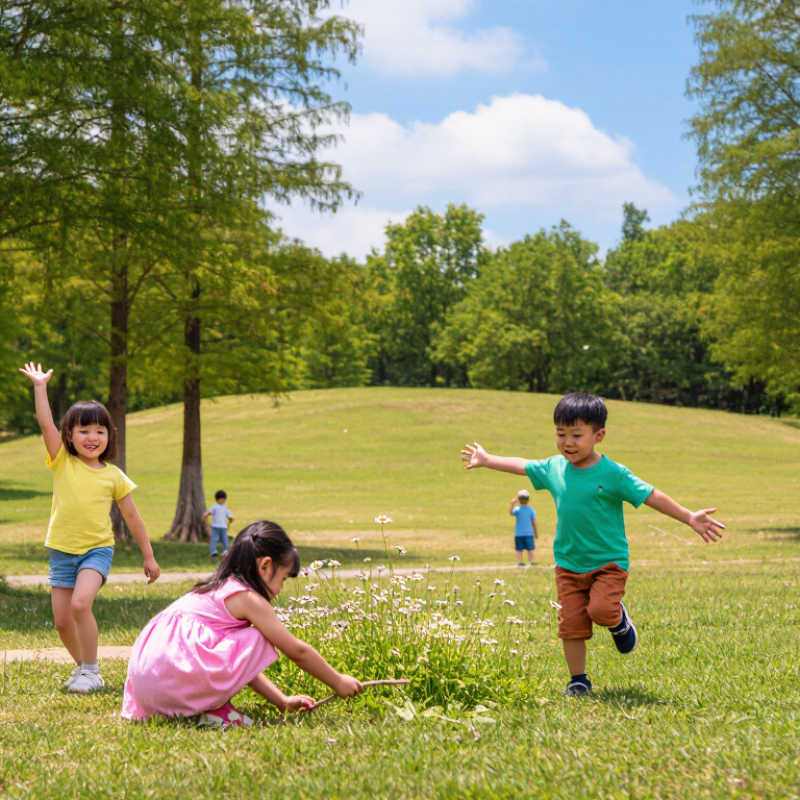
In 2026, outdoor play means more than sending children into a yard. It is time to move, explore, invent, and make manageable choices in real surroundings. A child balancing on a low log learns to adjust; one mixing mud and water tests ideas with their hands. Play can be energetic, quiet, social, or solitary. It does not need expensive equipment.
The World Health Organization recommends that children aged three to four get at least 180 minutes of physical activity across the day, including 60 minutes of moderate-to-vigorous activity. Outdoor play can help families create those opportunities, though the guideline covers activity in any setting. The Outdoor Foundation’s 2024 Outdoor Participation Trends Report found that 57.3% of Americans aged six and older took part in outdoor recreation in 2023. That figure includes many activities and ages, so it is not a measure of children’s play alone.
What matters is access and room to choose. A nearby park, a safe courtyard, or a walk where children stop to inspect a beetle can all count. Adults can offer basic boundaries, then resist directing every minute. That is harder than it sounds. Not every neighborhood has welcoming green space, and outdoor time will not solve every concern about health or attention. Still, regular chances to move freely can help children build coordination, curiosity, and confidence through ordinary experience.
What Are the Benefits of Outdoor Play for Children in 2026?
Outdoor play gives children opportunities to move, explore, and build physical skills. It can also help them work toward daily physical activity recommendations.
Daily activity target: The World Health Organization recommends at least 60 minutes of moderate-to-vigorous physical activity per day for both age groups shown. For children ages 3–4, this is part of a broader recommendation to be physically active for at least 180 minutes throughout the day. Outdoor play is one way to contribute to these targets; the recommendations are not specific to outdoor activity.
Source: World Health Organization, Guidelines on Physical Activity and Sedentary Behaviour (2020).
How Outdoor Play Supports Physical Health and Motor Skills
Outdoor play gives children room to move in ways that indoor routines may not. A walk across uneven grass, a game of tag, or climbing a low, stable structure can raise the heart rate and build strength. Regular movement supports cardiovascular fitness, bone health, and healthy sleep, though every child’s needs and abilities differ. Fresh air helps, too. It is not a cure-all.
Different play challenges different motor skills. Kicking a ball asks a child to balance, judge distance, and coordinate both legs. Catching a soft ball practices hand-eye coordination; hopping between chalk marks builds balance and control. These skills develop through repetition, not perfect performance. A missed catch is useful practice. So is a slow climb.
Adults can support movement without turning play into a lesson. Offer varied, age-appropriate options: open space for running, a small ball, or a path with gentle slopes. Check surfaces and equipment, and provide supervision suited to the child and setting. Some children prefer watching before joining in, and that is worth respecting. I have seen a child spend ten minutes studying a puddle before stepping over it; that pause may be part of learning, even if it looks like nothing is happening.
What Are the Benefits of Outdoor Play for Children in 2026? - How Outdoor Play Supports Physical Health and Motor Skills
| Dimension |
Evidence-based reference point |
How outdoor play can support children |
| Daily movement for ages 3–4 |
WHO recommends at least 180 minutes of physical activity at any intensity across the day, including at least 60 minutes of moderate-to-vigorous activity. |
Unstructured opportunities to walk, run, dance, climb, and play active games can contribute to daily movement. Outdoor time does not automatically count as moderate-to-vigorous activity; the intensity depends on what the child does. |
| Daily movement for ages 5–17 |
WHO recommends an average of at least 60 minutes per day of moderate-to-vigorous, mostly aerobic physical activity across the week. Vigorous aerobic activity, and activities that strengthen muscles and bones, are recommended on at least 3 days per week. |
Games such as tag, running, jumping, and climbing can help children accumulate active minutes and practice weight-bearing movements. Activity should be enjoyable and appropriate to the child’s age and ability. |
| Locomotor skills |
Running, jumping, hopping, balancing, and changing direction are examples of large-muscle movements children can practice during active play. WHO activity guidance recommends varied physical activity, but does not assign a specific motor-skill gain to outdoor play. |
Open spaces and varied, safe surfaces provide room to repeat movements, adjust speed, and navigate obstacles—experiences that can help children practice coordination and body control. |
| Object-control skills |
Kicking, throwing, catching, and rolling are common movement skills practiced through ball games. These are examples of play activities, not a quantified outcome in the WHO guidelines. |
Simple games with soft balls or other age-appropriate objects give children opportunities to practice timing, visual tracking, and hand–foot coordination. |
| Early gross-motor examples |
CDC lists running and kicking a ball among the developmental milestones many children reach by age 2. Milestones describe skills most children (75% or more) can do by a given age; they are not a guarantee for every child. |
Outdoor play can offer natural chances to practice these movements. Children develop at different rates; caregivers should discuss concerns about development with a healthcare professional. |
| Bone- and muscle-strengthening movement |
For ages 5–17, WHO recommends vigorous aerobic activities and activities that strengthen muscles and bones on at least 3 days per week. |
Age-appropriate jumping, climbing, and active games can involve muscles and bones. Provide suitable equipment, supervision, and a safe play area. |
Sources: WHO Guidelines on Physical Activity, Sedentary Behaviour and Sleep for Children Under 5 Years of Age; WHO Physical Activity fact sheet; CDC Developmental Milestones: 2 Years. Recommendations are age-specific; outdoor play is one way to be active, not a substitute for individualized medical advice.
How Outdoor Environments Encourage Learning and Creativity
Outdoor spaces make abstract ideas tangible. A child comparing wet and dry leaves is testing categories; a stick becomes a ruler, then a bridge for ants. Small discoveries invite questions, guesses, and revisions. The World Health Organization’s 2019 movement guidelines recommend at least 180 minutes of physical activity daily for children aged three to four, including 60 minutes of moderate-to-vigorous activity. Outdoor play can help meet that target while giving children room to explore. It is not a lesson plan in disguise. Sometimes the best learning begins with a puddle.
The American Academy of Pediatrics’ 2018 clinical report, “The Power of Play,” links play with language, self-regulation, and problem-solving. A garden, playground, or patch of dirt gives those skills real work: negotiate whose turn comes next, build a tower that keeps falling, and try again. Creativity often looks untidy. Adults may be tempted to correct every crooked structure, but leaving a little uncertainty lets children make choices and learn from them. A shaded bench, loose natural materials, and time without constant instructions can be enough. Not every child enjoys mud or noisy group games, either; quiet observation counts, and access should feel welcoming, not forced.
How Playing Outdoors Builds Social and Emotional Skills
What Are the Benefits of Outdoor Play for Children in 2026?
How Playing Outdoors Builds Social and Emotional Skills
A game outside gives children chances to practise social skills in real time. They might agree on rules for a made-up trail, take turns kicking a ball, or decide who gets the red bucket. These small negotiations help them listen, explain what they want, and handle different opinions. It can be messy.
Emotions show up quickly during play. A child may feel proud after climbing a low branch, then frustrated when a friend changes the game. With a calm adult nearby, children can name those feelings and try again without someone solving every problem for them. “Let’s pause” can be enough. Over time, repeated moments like these may support confidence, patience, and empathy.
Outdoor play is not automatically easy for every child. A noisy playground, crowded field, or fast-running game can feel overwhelming. Adults can offer quieter choices, simple materials, or a smaller group, while still letting children guide the play. Sometimes conflicts remain unresolved, and that can be uncomfortable to watch. Still, a brief check-in can help children reflect: Was everyone heard? What could make the game fairer next time?
What Helps Children Benefit from Outdoor Play Safely and Equitably
What Are the Benefits of Outdoor Play for Children in 2026?
What Helps Children Benefit from Outdoor Play Safely and Equitably
Outdoor play gives children room to move, explore, and solve small problems. A walk across uneven ground can build balance; collecting leaves may spark questions about seasons. Playing with others also offers practice sharing space and negotiating rules. These benefits are not automatic, though. Children need welcoming places, enough time, and adults who notice risks without directing every move.
Safety and fairness depend on practical details. Choose spaces with shade, drinking water, and age-appropriate equipment. Check surfaces for hazards, and adjust plans for heat, cold, or poor air quality. Supervision should fit children’s ages and needs, while still leaving room for independent play. Access matters, too: a safe nearby courtyard can be more useful than a distant park. Adults can over-plan activities; I have seen simple, child-led play work better, though it does not suit every day.
Tips: Pack water, hats, and weather-appropriate layers. Agree on clear boundaries, such as where children may roam. Offer different ways to join in, including quiet observation or seated play. Ask children what feels comfortable, then listen. Small changes help. Check whether the space works for children with different mobility, sensory, or communication needs.
Conclusion
In 2026, outdoor play remains an important part of childhood, giving children room to move, explore, and connect with the world around them. When people ask, “what are the benefits of outdoor play for children,” the answer includes more than fresh air: active games can help develop strength, balance, coordination, and other motor skills. Climbing, running, jumping, and handling natural materials let children practise movement in varied, engaging ways.
Outdoor environments also invite curiosity and creativity. Children can observe changes in nature, invent games, solve simple challenges, and learn through hands-on discovery. Playing with others can encourage cooperation, communication, patience, and confidence, while time outdoors may help children express emotions and build independence. To make these benefits accessible, adults can choose age-appropriate spaces, provide suitable supervision and weather protection, and consider children’s differing abilities and needs. Safe, welcoming opportunities for outdoor play help more children take part, learn, and thrive.

 ProActive Toys