Top 10 Outdoor Toys That Improve Child Fitness Levels?

Time:2026-10-05 Author:Ethan
0%

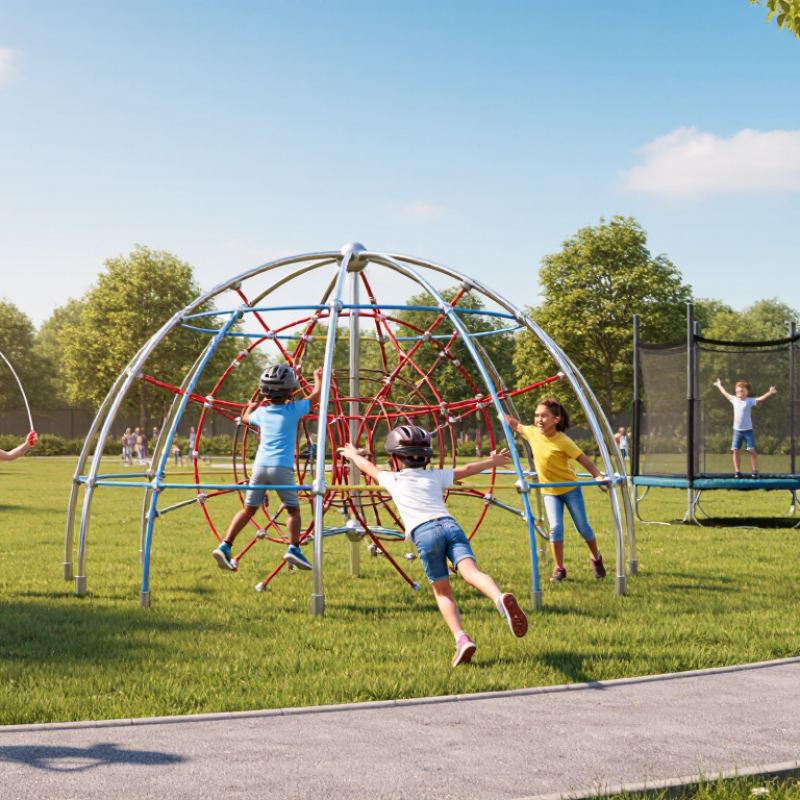
Outdoor play can turn ordinary movement into a daily fitness routine. A climbing dome challenges grip strength, balance, and coordination. A scooter encourages leg power and repeated cardiovascular effort. Even a simple skipping rope can raise breathing rates within minutes.

Parents often ask, “how can outdoor toys improve children's fitness levels?” The answer depends on how children use them. Active toys create reasons to run, jump, climb, throw, pedal, and recover. These actions support strength, endurance, flexibility, and motor development. They also make exercise feel less like a scheduled task.

Dr. Michael W. Yogman, a pediatrician and lead author of the American Academy of Pediatrics clinical report on play, wrote, “Play is not just about having fun but about taking risks, experimenting, and testing boundaries.” His observation fits outdoor fitness well. Children learn movement through practice, curiosity, and small physical challenges.

This guide examines ten outdoor toys that encourage active play. It considers the movements each toy supports, the skills children may develop, and practical safety details. A balance bike needs open space. A trampoline needs supervision and clear rules. A ball requires room to throw, chase, and miss.

Not every toy works for every child. A costly playset may remain untouched, while a small ball creates hours of movement. That part deserves honest reflection. Fitness improves through regular participation, not impressive equipment alone. Weather, age, confidence, and access also influence results. The strongest choices are enjoyable, adjustable, and easy to use repeatedly.
Top 10 Outdoor Toys That Improve Child Fitness Levels?

Defining Fitness Gains: WHO’s 60-Minute Daily Activity Target

Outdoor play becomes more meaningful when fitness has a clear measure. The World Health Organization recommends at least 60 minutes of moderate-to-vigorous physical activity daily for children aged 5–17. This activity should raise breathing and heart rate, not merely keep children busy.

Outdoor toys can make that target feel natural. A skipping rope supports repeated jumps and stronger coordination. A balance path challenges stability across grass, paving, or soft ground.

Ride-on toys build leg endurance when children travel uphill or around simple obstacles. Throwing games develop shoulder strength, timing, and quick movement. Active play should feel enjoyable, but effort still matters.

Watch the details. A child may spend thirty minutes outside yet move very little. Short bursts count, especially when children run, climb, crawl, and recover between games. I have noticed that children often play longer when adults join briefly, then step back.

The setup is not always perfect. Some toys become forgotten after a week. Rotating activities may help, although it requires patience and space. Adults should check surfaces, clothing, weather, and supervision needs before play begins. For younger children, activity guidance differs by age, so the 60-minute target should not be applied carelessly.

Selecting the Top 10: Toys Mapped to CDC Fitness Benchmarks

Top 10 Outdoor Toys That Improve Child Fitness Levels?

Selecting the Top 10 means matching play with CDC movement benchmarks. Children aged 6–17 need at least 60 minutes of moderate-to-vigorous activity daily, including muscle and bone strengthening three days weekly. CDC data shows only about one in four U.S. children meets this target. The 2022 WHO Global Status Report also estimates that 81% of adolescents remain insufficiently active. Therefore, the strongest choices are jump ropes, ride-on scooters, balance bikes, balls, flying discs, hula hoops, climbing structures, obstacle-course pieces, paddle sets, and water-play equipment. Jumping supports bone loading. Scooters train balance and leg endurance. Climbing and obstacle courses build strength, coordination, and confidence. Balls add short bursts of running, throwing, and changing direction.

Tips: Choose toys that create repeated movement, not long waiting. Aim for five-minute rounds with water breaks. A soft ball can reduce fear for beginners. Check surfaces, spacing, and helmet fit every time. The CDC recommends age-appropriate activity, yet “age-appropriate” is not always obvious. A six-year-old may manage a balance bike well, while another child needs a wider base and slower pace. Watch breathing, posture, and enjoyment. If play becomes painful, stop and reassess. The Outdoor Foundation’s 2023 Outdoor Participation Trends Report recorded more than 175 million U.S. outdoor participants, but participation alone does not prove fitness improvement. Children still need regular, active play, and adults should track consistency rather than perfect performance.

Active Play Mechanisms: Five Fitness Components Built Through Outdoor Toys

Outdoor toys can turn ordinary play into practical fitness training. A skipping rope and scooter raise heart rate through repeated movement. A mini soccer goal encourages sprinting, stopping, and kicking. These activities build cardiorespiratory endurance without feeling like formal exercise.

The other seven choices develop different skills. A balance bike and stepping stones challenge balance and body control. A climbing dome develops muscular strength in the arms, legs, and trunk. Hula hoops and jump balls improve coordination, rhythm, and spatial awareness. Frisbees and beanbag toss games sharpen agility, reaction speed, and hand-eye coordination. Flexibility also grows when children reach, twist, squat, and stretch during play. Small movements count.

From observing children outdoors, I find variety works better than strict routines. A child may skip for two minutes, then abandon the rope for climbing. That change is useful. Adults should check surfaces, equipment size, and supervision needs before play begins. Soft ground reduces impact, but it cannot remove every risk. Children wobble. They also learn from it. Fitness gains are uneven, and one energetic afternoon does not prove lasting improvement. Still, regular active play can make movement stronger, quicker, and more confident over time.

Top 10 Outdoor Toys That Improve Child Fitness Levels?

Active Play Mechanisms: Five Fitness Components Built Through Outdoor Toys

Rank Outdoor Toy Typical Active-Play Mechanism Cardiorespiratory Endurance
(1–5)
Muscular Strength
(1–5)
Balance & Stability
(1–5)
Coordination & Agility
(1–5)
Mobility & Flexibility
(1–5)
Primary Fitness Benefits Common Safety Considerations
1 Bicycle Continuous pedaling, steering, braking and route navigation 5 4 5 5 2 Leg endurance, aerobic capacity, dynamic balance and bilateral coordination Use a correctly fitted helmet; check brakes, tires and safe riding surfaces
2 Jump Rope Repeated two-foot or alternating-foot jumps with rhythmic timing 5 3 4 5 2 Cardio conditioning, foot speed, rhythm, coordination and lower-body power Use a clear, non-slip surface and an appropriately sized rope
3 Scooter Repeated push-offs, gliding, steering and controlled stopping 4 3 4 4 2 Unilateral leg strength, balance, agility and cardiovascular activity Wear a helmet and protective pads; avoid traffic and steep slopes
4 Climbing Structure Pulling, pushing, gripping, climbing and controlled descent 3 5 4 4 3 Upper-body and core strength, grip endurance, spatial awareness and balance Use age-appropriate equipment with impact-absorbing surfacing and supervision
5 Hula Hoop Repeated trunk, hip and limb movements to maintain hoop rotation 3 3 3 4 3 Trunk control, rhythmic coordination, posture and active range of motion Choose a child-sized hoop and provide sufficient space from people and objects
6 Flying Disc Running to space, throwing, catching, pivoting and changing direction 4 3 3 5 2 Hand-eye coordination, sprint activity, throwing control and agility Play in an open area away from roads, hard obstacles and crowded walkways
7 Skipping Stilts Stepping, bouncing and maintaining posture on raised foot platforms 3 3 5 4 2 Postural stability, ankle control, leg strength and motor planning Use on level ground with adult supervision and protective equipment
8 Ball for Active Games Running, kicking, throwing, catching, dribbling and rapid reactions 4 3 3 5 2 Whole-body coordination, agility, reaction speed and repeated movement Select a ball suitable for the child’s size and use a safe, open play area
9 Balance Board Shifting body weight, maintaining alignment and controlling small movements 1 3 5 4 2 Core activation, proprioception, ankle stability and postural control Use on a stable surface with clear space and age-appropriate supervision
10 Outdoor Obstacle Course Set Crawling, jumping, weaving, balancing, climbing and short sprints 5 4 5 5 3 Mixed cardiovascular fitness, functional strength, agility and movement versatility Inspect connections, provide safe spacing and adapt obstacles to ability level

Rating guide: 1 = limited direct contribution, 3 = moderate contribution, and 5 = strong contribution during sustained, age-appropriate play. Ratings describe the typical movement demands of each toy; actual fitness effects depend on play duration, intensity, technique, surface, supervision and the child’s developmental level.

Evidence Review: Toy Benefits Against WHO and AAP Activity Guidance

Outdoor toys can support fitness when they create repeated, enjoyable movement. The strongest choices include balls, jump ropes, hoops, scooters, bicycles, balance beams, climbing structures, flying discs, badminton sets, and soft obstacle-course equipment. These toys encourage running, jumping, throwing, balancing, coordination, and short bursts of vigorous activity. WHO guidance recommends that children aged 5–17 average at least 60 minutes of moderate-to-vigorous activity daily. For preschool children, WHO recommends 180 minutes of total physical activity, including energetic play. The American Academy of Pediatrics also emphasizes daily active play and age-appropriate safety.

Evidence does not prove that one toy directly improves fitness. The benefit depends on frequency, intensity, skill level, and adult support. A bicycle may build endurance for one child, but frustrate another. A simple ball can produce more movement than an expensive climbing structure. That matters. Research on outdoor play often measures activity time rather than long-term fitness, so conclusions remain imperfect. My practical view is cautious: choose toys that make children move repeatedly, not merely toys that look athletic.

Tips: Offer two or three options, such as a jump rope and ball. Use short games with clear goals, like five throws or a timed balance walk. Check helmets, surfaces, and toy condition regularly. Let children rest and drink water. Avoid forcing competition; enjoyment usually keeps movement going longer.

Top 10 Outdoor Toys That Improve Child Fitness Levels

Evidence review using activity-intensity proxies mapped to comparable activities in the 2024 Compendium of Physical Activities. WHO and AAP guidance recommends at least 60 minutes of moderate-to-vigorous physical activity daily for children aged 5–17.

Higher MET values indicate greater energy demand during comparable play activities. These figures are activity proxies rather than direct measurements of a specific toy. Children should have varied, enjoyable, age-appropriate physical activity, with adult supervision where necessary.

Safety and Inclusion: CPSC Age Rules, Skill Levels, and Accessible Play

Top 10 Outdoor Toys That Improve Child Fitness Levels?

Outdoor toys can build strength, balance, coordination, and confidence through active play. Useful choices include balls, jump ropes, hoops, ride-on toys, scooters, balance boards, climbing frames, target games, garden obstacle sets, and adaptive swings. The World Health Organization recommends at least 60 minutes of moderate-to-vigorous activity daily for children aged 5–17. Short play sessions still matter. A child may begin with five minutes of bouncing or pushing.

Safety starts with accurate age guidance. The U.S. Consumer Product Safety Commission’s Age Determination Guidelines Handbook explains how toys should match children’s physical, cognitive, and motor skills. Parents should check fall height, moving parts, surface stability, and protective equipment.

A scooter for an experienced eight-year-old may overwhelm a younger beginner. Labels help, but they cannot replace supervision. That part is often underestimated.

Inclusion requires more than adding one accessible feature.

Choose toys with adjustable resistance, large grips, visual instructions, and several ways to participate. A child who cannot climb can still throw, roll, steer, or direct a game.

CDC data show that about one in six U.S. children has a developmental disability, so flexible play design matters. Adults should watch for fatigue, frustration, and sensory overload. We will not always choose perfectly. Asking the child what feels comfortable may reveal a safer, better activity.

FAQS

How much daily activity should children aged 5–17 get?

They generally need at least 60 minutes of moderate-to-vigorous activity each day. Breathing should become faster.

What counts as moderate-to-vigorous outdoor activity?

Running, jumping, climbing, cycling, and fast games can raise breathing and heart rate. Standing around does not count much.

Can short activity bursts contribute to the daily target?

Yes. Five-minute rounds of running, jumping, or throwing can build useful activity time. Breaks are acceptable.

Which outdoor toys support different fitness skills?

Skipping ropes support jumping and coordination. Balance paths train stability. Balls develop throwing, timing, and quick direction changes.

How can ride-on toys improve fitness?

Riding around gentle obstacles or uphill can build leg endurance and balance. Flat, easy routes may provide less effort.

Should children use the same toy every day?

Not necessarily. Rotating ropes, balls, climbing pieces, and obstacle activities may maintain interest. Some toys become forgotten quickly.

How can adults encourage longer active play?

Join briefly, demonstrate one movement, then step back. Children may continue longer without constant adult direction.

What safety checks matter before outdoor play?

Check the ground, weather, clothing, spacing, and supervision needs. For wheeled toys, check helmet fit and route conditions.

Does outdoor participation automatically improve fitness?

No. Time outside does not prove meaningful movement. Track repeated activity, not perfect performance. I may overestimate progress sometimes.

When should adults stop an activity?

Stop if a child feels pain, loses control, or struggles unusually. Reassess the toy, pace, surface, and instructions.

Conclusion

Outdoor toys can turn daily movement into enjoyable, purposeful exercise. This article explores how can outdoor toys improve children's fitness levels by connecting active play with the WHO recommendation of at least 60 minutes of moderate-to-vigorous activity each day. The top ten toy categories are selected according to fitness-related goals recognized by public health guidance, including cardiovascular endurance, muscular strength, balance, coordination, flexibility, agility, and healthy body composition. Running games, jumping equipment, climbing structures, wheeled play, throwing activities, and obstacle challenges can each encourage children to move in different ways while developing fundamental motor skills.

The article also reviews how these benefits support guidance from the WHO and AAP, while emphasizing that toys should complement—not replace—varied physical activity. Safety and inclusion are equally important: caregivers should follow CPSC age recommendations, choose equipment suited to a child’s abilities, supervise use, and provide adaptations for different mobility, sensory, or confidence levels. With thoughtful selection, outdoor toys can make fitness accessible, social, and motivating for a wide range of children.

Ethan

Ethan

Ethan is a seasoned marketing professional with a deep expertise in our company's innovative product line. With a passion for sharing knowledge and insights, he takes the lead in regularly updating our corporate blog, where he explores industry trends, product features, and effective marketing......